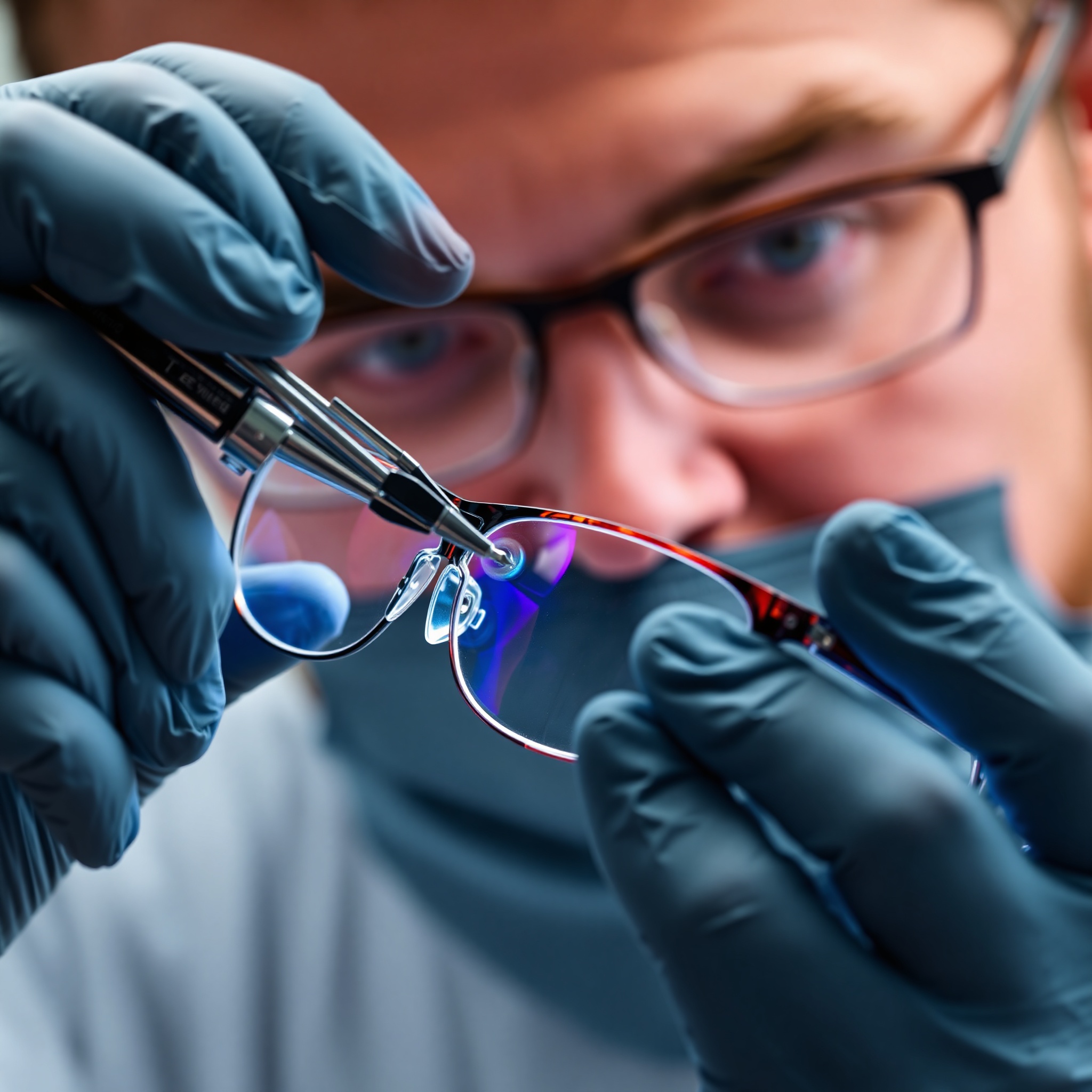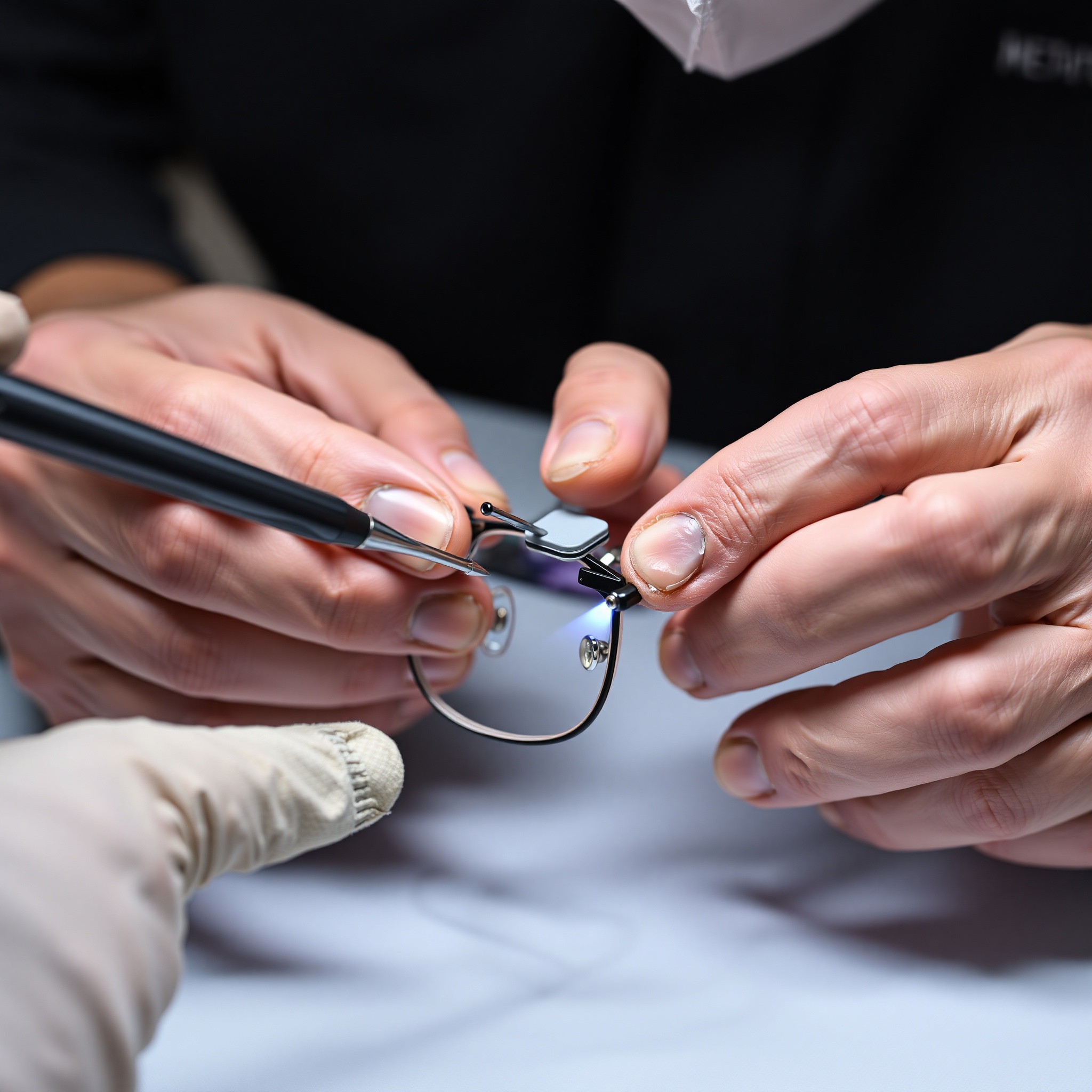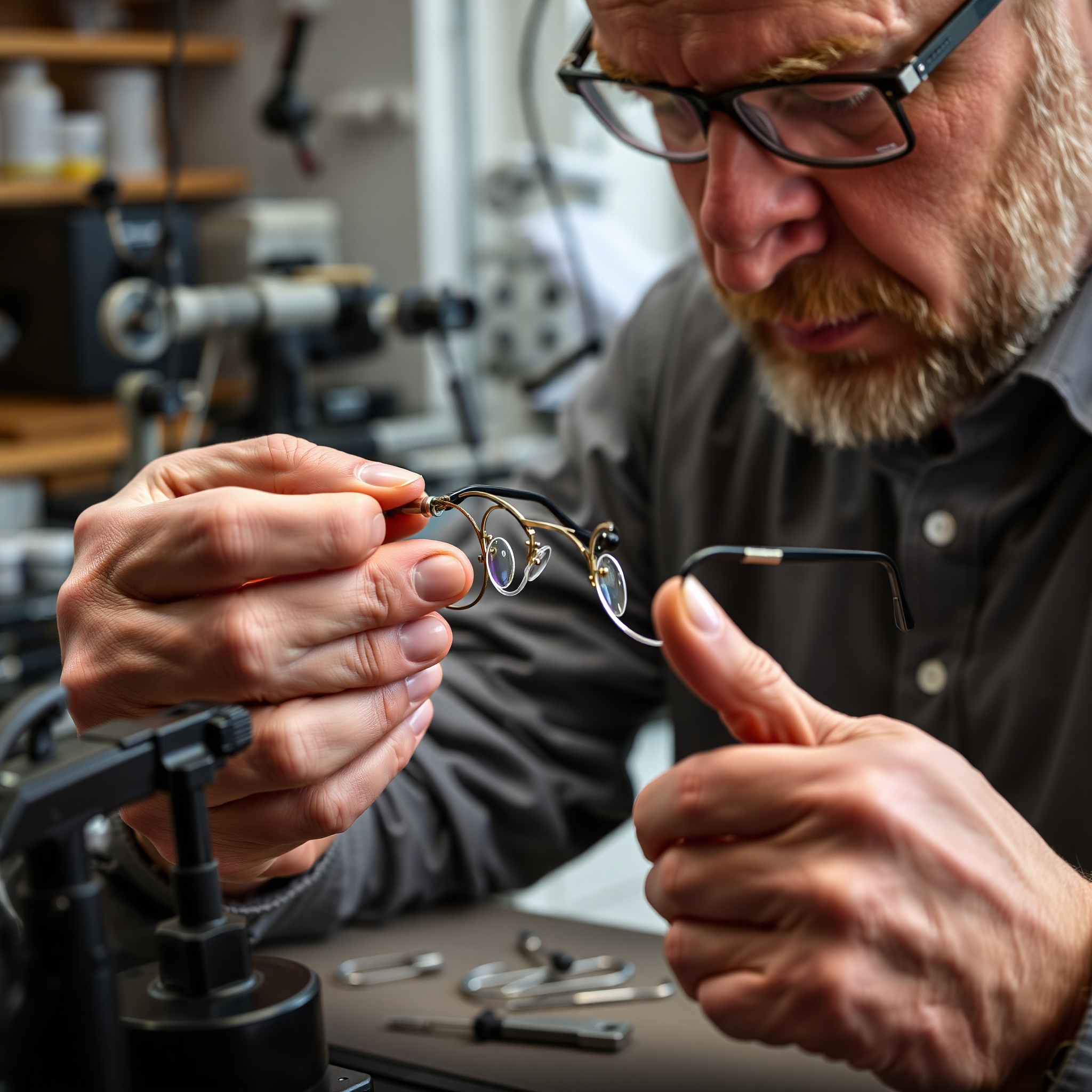
Complete Guide to Frame Repair and Adjustment
Learn professional techniques for fixing bent frames, tightening screws, and adjusting bridge height to restore comfort and durability.
Read ArticleMaster professional-grade strategies for fixing broken hinges, replacing temple screws, and reinforcing weak connection points. Learn how to restore structural integrity and extend the lifespan of your eyeglasses with proven repair techniques.
The hinge mechanism is one of the most critical components of eyeglasses, responsible for connecting the frame front to the temple arms. This ingenious assembly consists of several interconnected parts working in perfect harmony: the barrel, which houses the pivot pin; the screw that holds everything together; and the spring element that provides tension. When any of these components fail, your entire eyeglass frame becomes compromised.
Common hinge failures occur for several reasons. Repeated opening and closing creates metal fatigue, especially in lower-quality frames. Environmental factors like humidity, temperature fluctuations, and salt exposure accelerate corrosion of the metal components. Impact damage from drops or crushing forces can bend the barrel or strip the screw threads. Many people don’t realize that loose hinges are one of the earliest warning signs—a creaking sound or slight wobble indicates the screw is gradually loosening and needs immediate attention.
Addressing hinge problems requires a systematic approach and the right tools. Professional eyeglass repair technicians follow a standardized procedure to diagnose and fix hinge issues. The first step involves careful inspection under magnification to identify the exact nature of the problem. Is the hinge completely loose, or is there metal damage? Are the screw threads intact, or have they been stripped?
Set up a clean, well-lit area with a soft surface (microfiber cloth or mat) to prevent losing small parts. Gather your tools: precision screwdriver set, hinge screws of various sizes, magnification lens, and lubricant.
Use magnification to examine both hinges. Look for visible damage, corrosion, or bent metal. Test screw tightness by gently attempting to turn it clockwise with the appropriate screwdriver—use minimal pressure to avoid stripping.
Using the correct screwdriver size, gently tighten the hinge screw in a clockwise direction. Turn approximately one-quarter rotation at a time, then test the hinge movement. The goal is snug tightness without excess pressure—over-tightening can crack the barrel.
Gently flex the frame, opening and closing the temple arms to ensure smooth movement without grinding sounds. The hinge should feel stable but still flex smoothly. Repeat on both sides if applicable.
Once tightened, apply a tiny amount of silicone-based lubricant to the hinge mechanism. This protects against corrosion and ensures smooth operation. Wipe away any excess to prevent dirt accumulation.
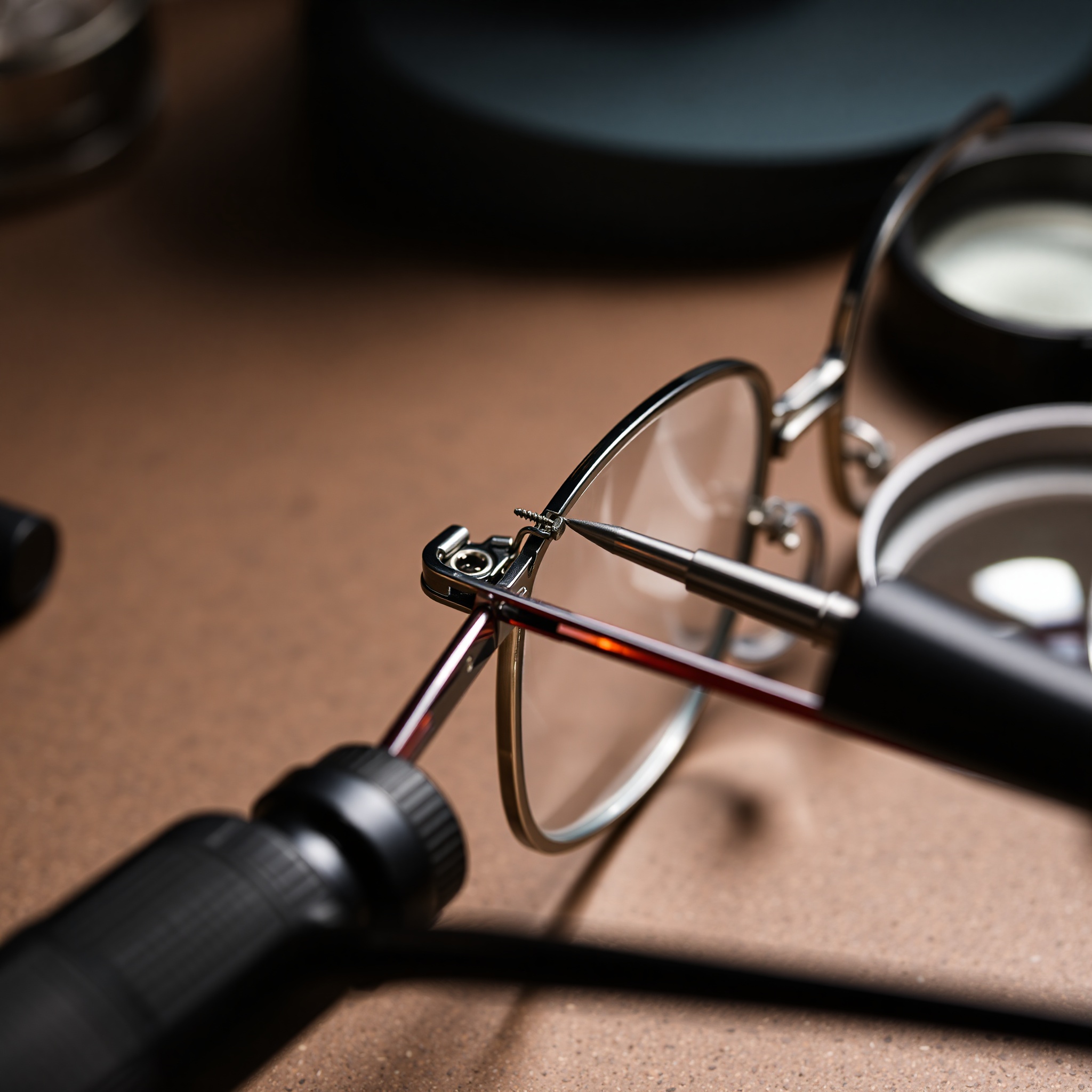
The temple arms are the long pieces that extend behind your ears, and their connection to the frame front through the hinges is crucial. Temple arms experience significant stress during daily wear—they’re constantly being opened, closed, bent, and adjusted. This constant movement eventually takes its toll, creating wear patterns and stress points that can lead to complete failure.
Temple screws require special attention because they’re exposed to more movement than other frame components. Unlike the barrel screws that stay relatively stationary, temple screws must withstand repeated rotational stress. Professional repair specialists understand that temple arm problems often involve not just loose screws, but also bent screw holes, stripped threads, or cracked plastic near the connection point.
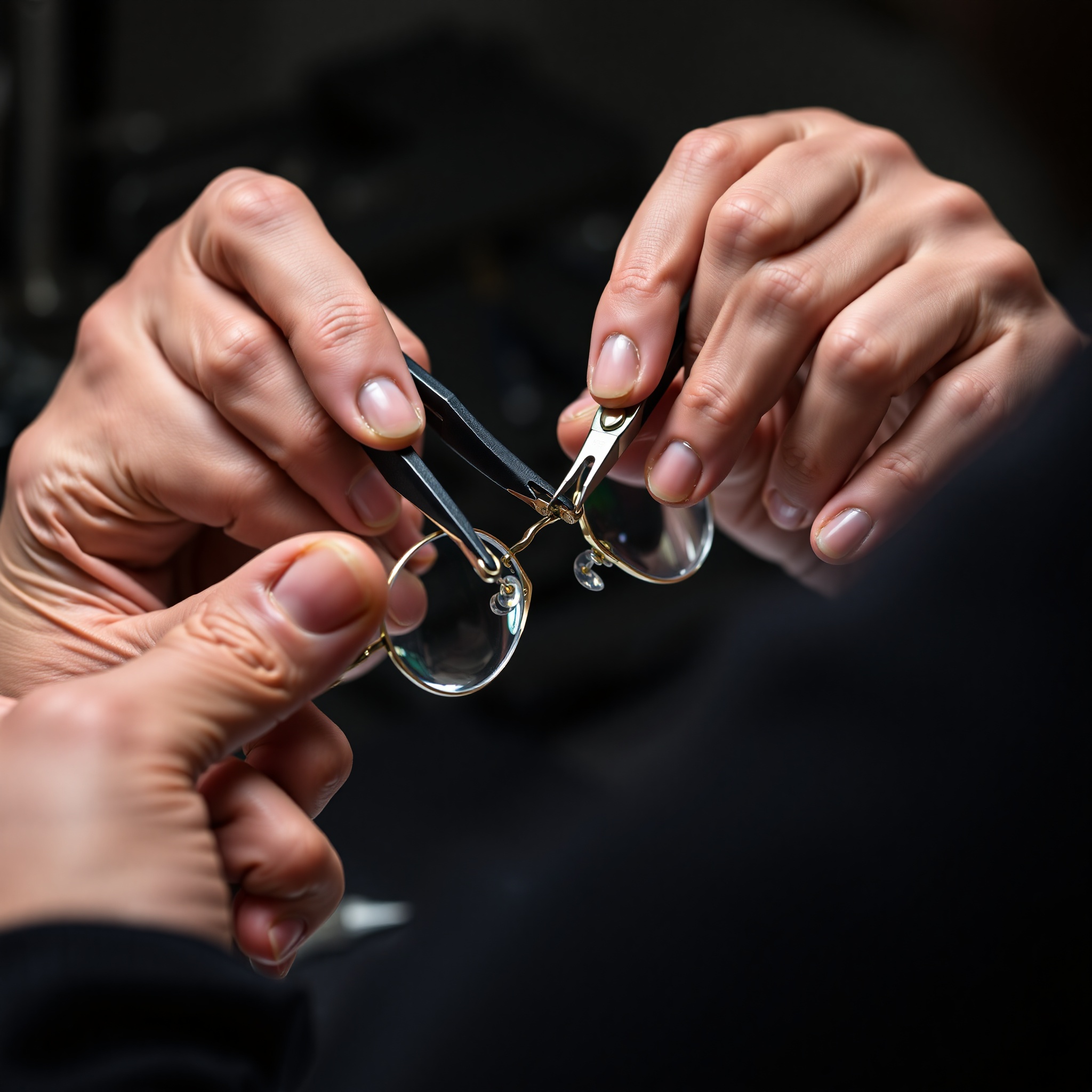
Beyond basic tightening, professional repair specialists employ advanced techniques to reinforce weak connection points and prevent future failures. These methods extend frame lifespan significantly and are particularly valuable for expensive designer frames or sentimental glasses that you wish to preserve.
For plastic frames showing stress cracks near hinges, apply medical-grade epoxy resin around the connection point. This hardens to create a strong, durable reinforcement that prevents crack propagation. The process requires careful application to maintain frame aesthetics while maximizing structural integrity.
Original equipment screws are sometimes undersized or lower quality. Upgrading to premium stainless steel screws with proper washer support distributes force more effectively and resists corrosion. Threadlocker compounds add vibration resistance, keeping screws tight longer.
Professional repair shops install small metal or plastic bushings inside the hinge barrel to reduce wear between metal components. This decreases play and extends hinge life by several years, particularly beneficial for frequently-worn frames.
When individual components fail beyond repair, complete hinge replacement is necessary. Modern replacement hinges offer improved designs with better spring mechanisms and more durable materials, often outperforming original equipment.
Hinge and temple arm problems don’t require you to replace your entire eyeglasses. With proper understanding of these repair techniques and regular preventive maintenance, you can extend the lifespan of your frames significantly. Whether you’re dealing with a simple loose screw or more complex structural issues, the key is addressing problems promptly before minor issues escalate into complete failure.
For valuable frames, designer glasses, or sentimental pairs with special significance, professional repair is always the safest option. Expert opticians and repair specialists have the tools, knowledge, and experience to handle even the most challenging hinge problems. For routine maintenance and minor adjustments, these techniques empower you to keep your glasses in excellent condition between professional visits.
Remember that consistent care and attention to your eyeglasses extends their life, improves your wearing comfort, and protects your investment. By implementing the preventive maintenance schedule and acting immediately when problems appear, you’ll enjoy reliable, comfortable vision correction for years to come.